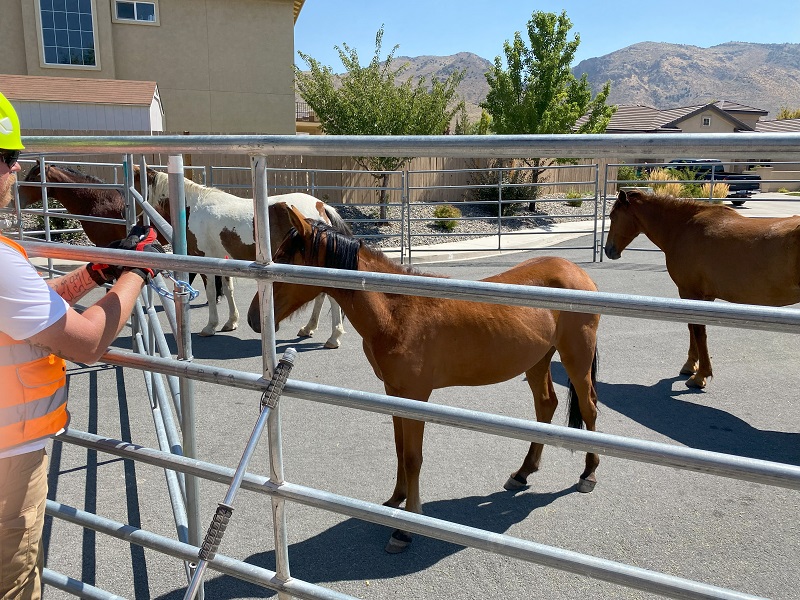
This page covers the curriculum to meet state and local agency requirements to be recognized as a credentialed Emergency Horse and Livestock Handler, which is the first step in becoming a fully credentialed Technical Large Animal Rescue Technician.
This credentialing module is divided into three segments: FEMA-EMI Courses, LRTC Distance Learning, and a 5-hour hands-on Exercises session. The FEMA-EMI courses are on-line. During COVID we converted our classroom section into on-line distance learning, which turned out to be more convenienent for students as they could proceed through those elements at their convenience.
The FEMA-EMI courses conclude with quizzes as does the Emergency Horse and Livestock Handling Distance Learning segment.
The Distance Learning module will conclude with a quiz that can be taken "open book." (You can review the material if you aren't sure of an answer.)
Assistance with any of these elements can be obtained by Emailing Megan McCoy.
This course explains the Incident Command System, the standardized operating system that professionals and volunteers must work within during significant emergencies.
This course provides an introduction to the National Incident Management System
Since some incidents may involve roadways and highways, volunteers are expected to obtain Traffic Incident Management certificates. While volunters aren't generally traffic "managers," all responders need to understand basic safety protocols when working around uncontrolled traffic as well as whether a particular scene is safe or not. This training is provided free of charge by the Responder Safety Learning Network.
National Traffic Incident Management (TIM) Training. Avg. course time, about 6 hours for students who already have field experience, up to 10 hours for those who need to review additional resource materials.
(Up to 10 CEUs.)
This course explains various dangers and safety issues when working in and around traffic, including nationally recognized safety practices. Target students are police and fire / EMS, however the safety principles and practices covered apply to anyone working in and around traffic. A nationally recognized certificate is provided upon completion.
(If you use this link, click "National TIM Training" from the left hand menu on the Responder Safety web page.)
This video describes the training that you will need to complete to become credentialed and the conditions in which you would likely operate.
LRTC Organization and Operations
This video describes how LRTC is organized and how our field operations are conducted.
HANDLING, MOVEMENT AND TRANSPORTATION
HANDLING LOOSE HORSES: EMERGENCY MOVEMENT
Part 1 of three videos that describe some best practices when movement, containment or transportation of horses is needed due to emergencies.
HANDLING LOOSE HORSES, Part 2
Part 2 of a series that illustrate best practices when handling, containing and loading loose horses, such as removing them from active traffic, evacuation operations and similar circumstances.
HANDLING LOOSE HORSES, Part 3
This video discusses more advanced practices for emergency movement of large animals including emergency field containment and veterinary assistance.
TRAILER OPERATIONS
AND SAFETY
This video describes best practices for towing trailers and safe operations.
DOMESTIC HORSE LOADING
This video discusses best practices for loading horses as may be needed during responses.
HIGHWAY RESPONSES FOR LOOSE LIVESTOCK
This video covers LRTC's protocols and best practices for responses to incidents involving livestock at large on highways and freeways, with the majority of livestock being horses.
FLOOD EVACUATIONS
This presentation covers issues and practices relative to evacuating livestock - primarily horses - from floodwaters including hazards associated with flood events.
WILDFIRE AWARENESS AND
SURVIVAL FOR
EVACUATION VOLUNTEERS
This presentation covers key safety and survival elements when working near wildfires. It covers relevant RT-130 standards, adapted for evacuation volunteers.
WILDFIRE EVACUATIONS
This presentation covers issues and practices relative to evacuating livestock - primarily horses - that are threatened by wildfires. It covers issues relating to owners / stakeholders and response teams.
EMERGENCY SHELTERING
EMERGENCY LIVESTOCK SHELTERING
Best practices for setting up and operating shelters during significant emergencies.
CRITICAL INFORMATION
OPERATIONAL SAFETY
Safety policies and best practices with explanations as to their rationale.
TLAR CRIME SCENE PRACTICES
Best practices for technical large animal rescue responders when encountering possible crime scenes.
Saturday November 14, 0900-13:30
Main facility: 11345 Silver Lane, Stagecoach, NV 89429
Link to Registration Form (Opens in a new tab.)
TAKE THE QUIZ
In order to earn certification you must take the following quiz. It is "open book," meaning that you may review videos in the event you are unsure of an answer. Passing score is 80%.